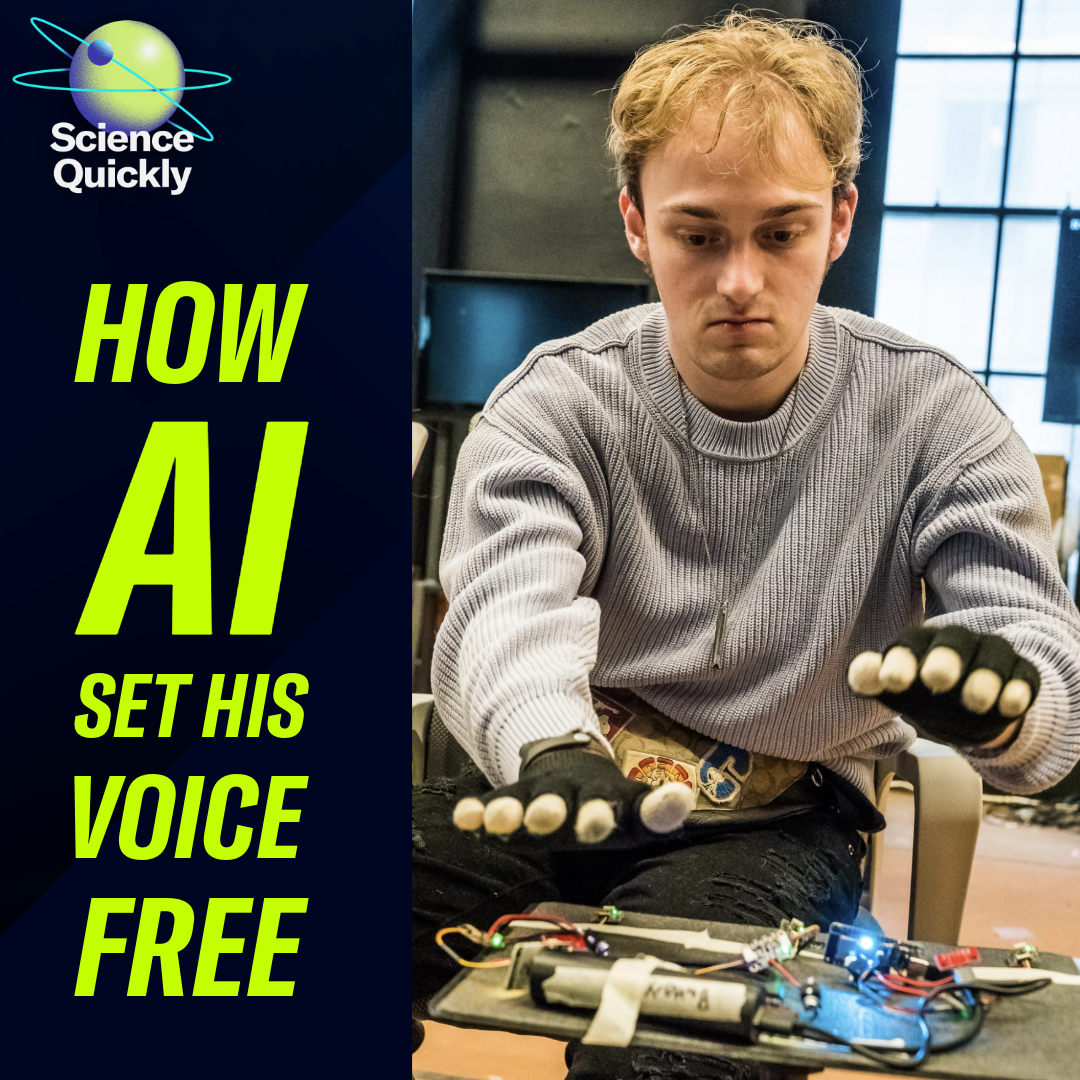
How AI helped a nonspeaking opera star find his voice
60-Second Science sciam.com
This is what was read here when it was published. Scientific American no longer carries it in what it publishes now.
In this episode of Science Quickly, we meet Jakob Jordan, an autistic performer with apraxia, who stars in the groundbreaking opera Sensorium Ex. Host Rachel Feltman talks with Jordan, composer Paola Prestini and New York University researcher Luke DuBois about the custom artificial intelligence voice technology that helped Jordan express himself in a way traditional speech devices can’t. Together, they explore how AI can enhance, rather than replace, human creativity and communication.
E-mail us at [email protected] if you have any questions, comments or ideas for stories we should cover!
More ways to use this
Open on another device

Scan to open this page. Your saved notes and account access are not included.