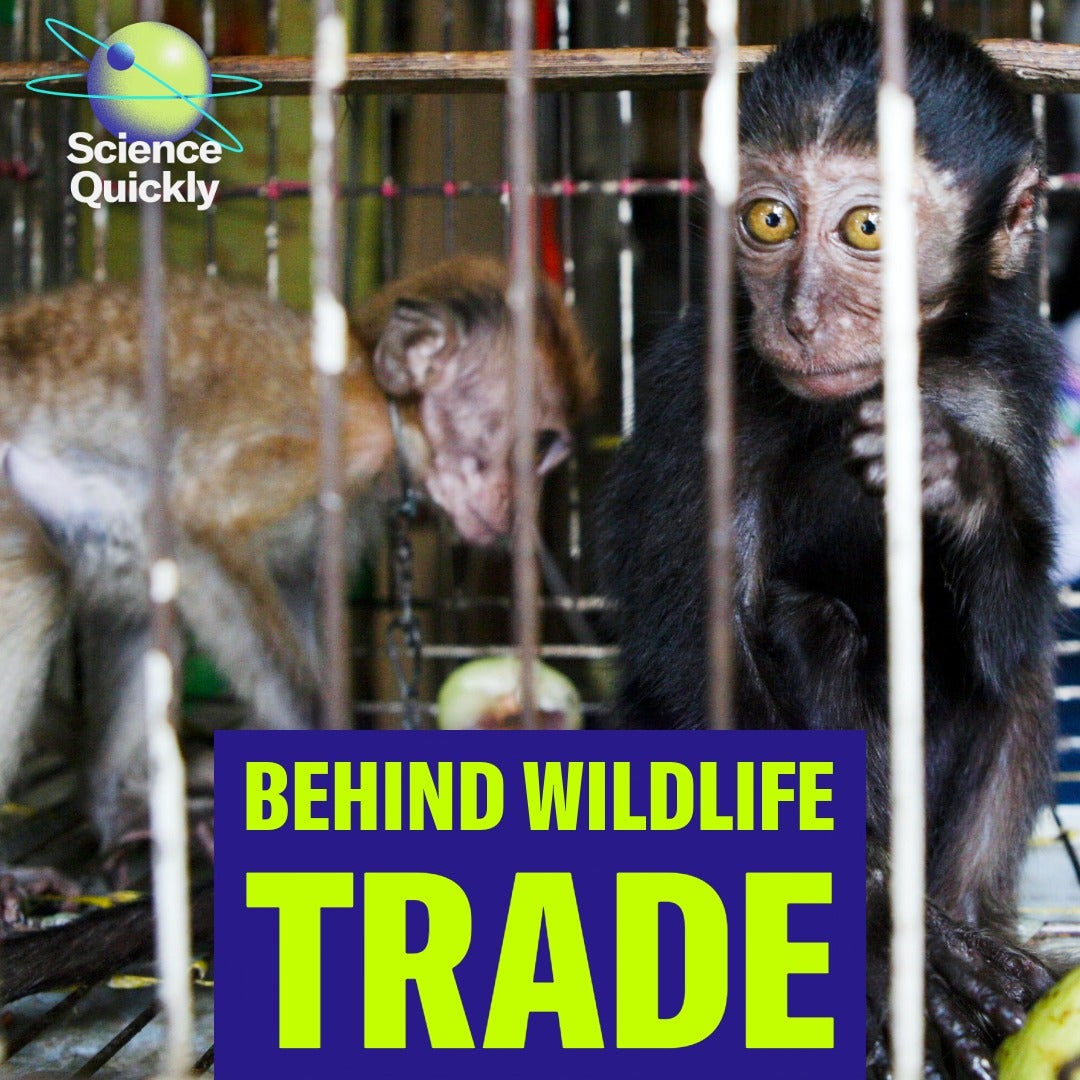
The wildlife trade may be speeding up the next pandemic
60-Second Science sciam.com
This is what was read here when it was published. Scientific American no longer carries it in what it publishes now.
In this episode of Science Quickly, host Rachel Feltman talks with Yale University epidemiologist Colin Carlson about new research showing that the global wildlife trade is spreading dangerous pathogens far faster than scientists once thought. The conversation challenges the idea that pandemic risks are limited to distant “wet markets,” revealing how everyday wildlife trade—from pet stores to industrial farms—brings animals, people and diseases into close contact. Carlson explains why a stronger investment in basic science is critical to preventing the next COVID‑like pandemic.
“Wildlife trade drives animal-to-human pathogen transmission over 40 years,” in Science, Vol. 392; April 9, 2026
More ways to use this
Open on another device

Scan to open this page. Your saved notes and account access are not included.